Projects Rarely Fail Because of One Big Mistake.
Most interior projects don’t suddenly go off track.
They drift.
One small update gets missed.
One approval takes longer than expected.
One delivery isn’t communicated.
One drawing isn’t shared with the right person.
Individually, these seem insignificant.
Together, they create weeks of delay, unexpected costs, frustrated teams, and disappointed clients.
By the time leadership realizes something is wrong, the delay has already spread across multiple departments.
Every delayed project has a story.
Almost every story begins with one missed update.
Small Communication Gaps Create Big Operational Problems
Imagine a simple scenario.
A client approves a design revision during a site visit.
The designer notes it down.
But the procurement team isn’t informed.
Materials are ordered using the previous design.
Three days later, the mistake is discovered.
Now the business must:
- Cancel purchase orders.
- Reorder materials.
- Delay installation.
- Reschedule vendors.
- Explain the delay to the client.
The original issue wasn’t procurement.
It wasn’t execution.
It wasn’t design.
It was communication.
A single missed update triggered a chain reaction across the entire project.
Interior Projects Are Built on Dependencies
Unlike many industries, interior execution is sequential.
One activity depends on another.
Civil work must finish before electrical.
Electrical before false ceiling.
False ceiling before painting.
Painting before furniture installation.
Furniture before styling.
One delay doesn’t remain isolated.
It pushes every dependent activity further down the timeline.
The larger the project, the greater the impact.
That’s why visibility matters more than speed.
You can’t fix what you don’t know.
Why Updates Get Missed
Most missed updates aren’t caused by negligence.
They’re caused by fragmented operations.
Project information is scattered across:
- WhatsApp groups
- Phone calls
- Emails
- Excel sheets
- Site notebooks
- Shared folders
Every department receives information differently.
Some updates are documented.
Others remain verbal.
Some reach the right people.
Others disappear completely.
As projects grow, the probability of missing critical information increases dramatically.
The Cost of One Missed Update
A delayed update affects far more than a project timeline.
It impacts every part of the business.
Lost Productivity
Teams spend hours investigating what went wrong instead of moving work forward.
Budget Overruns
Incorrect procurement.
Idle labor.
Rework.
Emergency purchases.
Expedited shipping.
Small communication failures quickly become financial losses.
Reduced Client Trust
Clients don’t just notice delays.
They notice uncertainty.
When project teams provide inconsistent answers or conflicting timelines, confidence declines.
Trust is difficult to rebuild once it’s lost.
Team Frustration
No one enjoys working in reactive environments.
When information is incomplete, everyone spends more time fixing avoidable problems than delivering quality work.
Morale suffers.
Burnout increases.
Visibility Prevents Delays Before They Happen
Imagine if every project update automatically reached every relevant stakeholder.
The project manager.
The procurement team.
Finance.
Site engineers.
Leadership.
Everyone works from the same real-time information.
No one has to wonder:
“Has this been approved?”
“Did anyone inform procurement?”
“Has the site received the updated drawing?”
Visibility removes uncertainty.
Decisions happen faster because information is already available.
Why Dashboards Matter More Than Meetings
Many businesses rely on daily meetings to understand project status.
But meetings don’t create visibility.
They temporarily replace it.
The same questions are asked every day because information isn’t continuously updated.
Modern project management replaces repetitive meetings with live dashboards.
Instead of asking for updates, leadership sees:
- Project progress.
- Pending approvals.
- Delayed milestones.
- Vendor status.
- Financial health.
- Site activity.
Meetings become strategic instead of informational.
AI Makes Updates Instant
The biggest challenge isn’t collecting information.
It’s capturing it while work is happening.
Imagine a site engineer walking through a project and saying:
“Wardrobe installation completed. Kitchen countertops delayed because the supplier needs two more days.”
AI immediately understands the context.
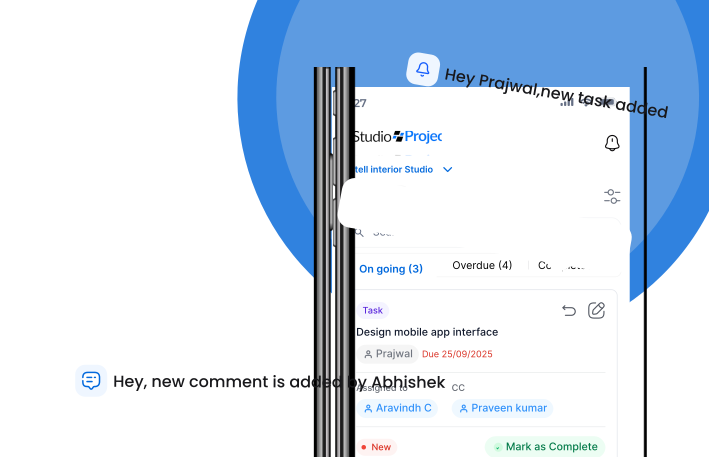
Without anyone typing reports or updating spreadsheets, the system automatically:
- Updates project progress.
- Revises milestone timelines.
- Alerts procurement.
- Notifies the project manager.
- Creates follow-up tasks.
- Maintains an audit trail.
The update becomes actionable the moment it’s spoken.
Nothing is forgotten.
Nothing depends on memory.
Standardized Workflows Reduce Communication Risk
Growing businesses often rely on individual habits.
One project manager updates Excel.
Another uses WhatsApp.
Someone else prefers phone calls.
Inconsistent processes create inconsistent outcomes.
Standardized workflows ensure every project follows the same communication path.
Approvals.
Procurement.
Execution.
Quality checks.
Handover.
Nothing advances without being recorded.
Consistency dramatically reduces missed updates.
Proactive Businesses Solve Problems Earlier
There are two ways to manage projects.
Reactive management.
Problems are discovered after they affect the timeline.
Or proactive management.
The system identifies risks before they become delays.
Businesses with operational visibility don’t wait for clients to ask about project status.
They already know where intervention is needed.
This changes leadership from firefighters into planners.
The Best Projects Aren’t Perfect. They’re Visible.
No project is completely free of challenges.
Vendors get delayed.
Clients request changes.
Materials become unavailable.
Unexpected site conditions appear.
Successful businesses aren’t those that avoid every problem.
They’re the ones that detect issues early enough to respond.
Visibility doesn’t eliminate delays.
It prevents small delays from becoming major failures.
Key Takeaways
- Most project delays begin with a single missed update.
- Communication gaps create cascading delays across design, procurement, finance, and execution.
- Centralized visibility reduces uncertainty and improves decision-making.
- AI-powered updates ensure information is captured, shared, and acted upon instantly.
- Standardized workflows help growing businesses reduce operational risk and deliver projects more predictably.
Frequently asked questions
Why do interior projects experience delays?
Most delays are caused by missed communication, delayed approvals, procurement issues, and lack of real-time project visibility rather than major technical problems.
How can project updates prevent delays?
Timely updates allow every stakeholder to respond quickly, preventing issues from affecting downstream activities.
Why is centralized communication important?
When all project information is stored in one platform, teams avoid conflicting information, duplicate work, and missed approvals.
How does AI improve project communication?
AI converts voice updates into structured project records, automatically updates dashboards, assigns tasks, and alerts relevant teams.
What should firms track to reduce delays?
Milestones, approvals, procurement status, site progress, financial health, and vendor coordination should all be tracked in real time.