The Biggest Time Drain in Your Business Isn’t Designing. It’s Chasing Updates.
Ask any founder of a growing interior design or execution company where most of their day goes.
The answer is rarely “design.”
Instead, it’s a series of follow-up conversations.
“Has the client approved the drawing?”
“Did procurement place the order?”
“Has the site received the material?”
“Can someone share today’s progress photos?”
“Has the electrician completed the work?”
These questions seem harmless.
Individually, they take only a few minutes.
Collectively, they consume hours every single day.
And unlike productive work, follow-ups don’t create value.
They simply help people find information that should already be available.
Every Follow-Up Is a Symptom of Missing Visibility
Businesses often mistake follow-ups for project management.
They aren’t.
A follow-up exists because someone doesn’t know the current status of a task.
If every stakeholder had access to real-time information, many follow-up conversations would disappear.
Think about how often teams ask:
- What’s pending?
- Who owns this task?
- Has the vendor confirmed delivery?
- Has finance cleared the payment?
- Has the client approved the revision?
These aren’t operational activities.
They’re information retrieval.
The more manual follow-ups your business needs, the less visibility your system provides.
The Ripple Effect of One Missed Update
Imagine this scenario.
A supplier informs the procurement team that marble delivery will be delayed by three days.
The update stays inside one WhatsApp conversation.
The project manager doesn’t see it.
The site team continues preparing installation.
The client is promised the original timeline.
The labor team arrives on schedule.
Then everyone discovers the material hasn’t arrived.
Now the business faces:
- Idle labor costs.
- Project delays.
- Client dissatisfaction.
- Emergency coordination.
- Additional follow-up calls.
The delay wasn’t caused by procurement.
It was caused by information failing to reach everyone who needed it.
Manual Coordination Doesn’t Scale
When managing three or four projects, founders can personally keep track of everything.
As projects increase, coordination grows exponentially.
Ten projects don’t create ten times more communication.
They create hundreds of additional conversations every week.
Project managers chase updates.
Designers request approvals.
Procurement follows vendors.
Finance follows payments.
Clients request progress reports.
Everyone is following up with someone.
Eventually, managing communication becomes a full-time job.
The Real Cost Isn’t Time. It’s Opportunity.
Every hour spent chasing updates is an hour not spent creating value.
Designers spend less time designing.
Project managers spend less time planning.
Founders spend less time building the business.
Site engineers spend more time answering calls than supervising execution.
Manual coordination creates invisible costs that rarely appear in financial reports.
But they directly affect:
- Productivity.
- Employee morale.
- Project speed.
- Profitability.
- Client experience.
These costs compound as businesses grow.
Why Teams Depend on Follow-Ups
Most teams aren’t disorganized.
They’re simply working with disconnected systems.
Information lives everywhere.
WhatsApp for communication.
Excel for tracking.
Email for approvals.
Google Drive for drawings.
Accounting software for payments.
Each department has its own version of the truth.
To understand the complete picture, people have to ask each other.
The follow-up becomes the bridge between disconnected tools.
Automation Replaces Questions With Answers
Imagine opening a dashboard and instantly knowing:
- Which tasks are delayed.
- Which approvals are pending.
- Which vendors haven’t responded.
- Which milestones are complete.
- Which invoices are outstanding.
- Which sites require immediate attention.
No calls.
No messages.
No waiting.
The information is already there.
Automation doesn’t eliminate communication.
It eliminates unnecessary communication.
Teams spend less time asking questions and more time making decisions.
AI Turns Everyday Conversations Into Action
One of the biggest operational challenges is getting timely updates from site teams.
After a long day on-site, nobody wants to fill lengthy reports.
This is where AI transforms project management.
A site engineer simply says:
“Kitchen tiling completed. Painting delayed because the client requested a color change.”
Instead of becoming another forgotten voice note, AI automatically:
- Updates project progress.
- Creates follow-up tasks.
- Notifies the project manager.
- Alerts procurement if required.
- Revises milestone timelines.
- Records the update in the project history.
The conversation becomes structured data.
No duplicate work.
No manual reporting.
No missed information.
Better Workflows Reduce Managerial Overhead
Many founders believe growth requires hiring more coordinators.
But often, the business doesn’t need more managers.
It needs fewer repetitive tasks.
When updates happen automatically:
Project managers stop chasing information.
Founders stop asking for status reports.
Departments stop waiting for responses.
Meetings become shorter because everyone already knows the project status.
Operational efficiency improves naturally.
Transparency Improves Accountability
People perform better when expectations are visible.
If every task clearly shows:
- Owner
- Deadline
- Current status
- Dependencies
There is far less need for reminders.
The system itself becomes the follow-up.
Instead of asking people for updates, managers simply review dashboards.
This shifts the organization from reactive management to proactive execution.
The Businesses That Scale Best Don’t Chase Information
Successful interior businesses don’t grow because they work harder.
They grow because their operations become smarter.
Information flows automatically.
Projects update in real time.
Departments remain aligned.
Leadership focuses on strategy instead of coordination.
Manual follow-ups are replaced by intelligent workflows.
As project volume increases, operational overhead stays under control.
That’s the difference between running projects and running a scalable business.
Key Takeaways
- Manual follow-ups are a symptom of poor operational visibility.
- Chasing updates consumes valuable time without creating business value.
- Disconnected tools force teams to rely on conversations instead of systems.
- Automation provides real-time visibility and reduces unnecessary coordination.
- AI-powered workflows transform everyday updates into structured project information, improving productivity and accountability.
Frequently asked questions
Why are manual follow-ups a problem in project management?
They consume time, reduce productivity, delay decisions, and indicate that project information is not easily accessible.
How can automation reduce follow-ups?
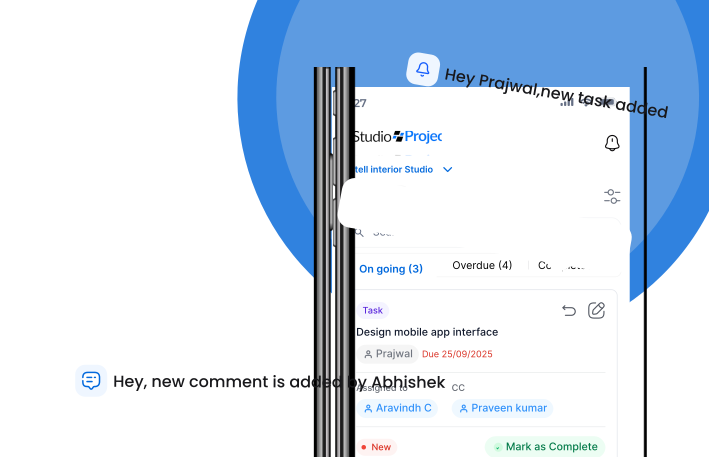
Automation updates project progress, assigns tasks, sends notifications, and keeps dashboards current, reducing the need for repetitive status requests.
What role does AI play in project coordination?
AI converts voice updates into structured project data, automates reporting, tracks milestones, and alerts teams about delays or pending actions.
Why do follow-ups increase as businesses grow?
More projects create more stakeholders, dependencies, and communication channels. Without centralized systems, coordination effort grows rapidly.
What should interior firms automate first?
Project updates, task tracking, approvals, milestone reporting, procurement notifications, and site communication deliver the biggest operational improvements.