Beautiful Designs Don’t Build Successful Businesses. Great Execution Does.
Every interior designer dreams of creating spaces that people remember.
Beautiful homes.
Inspiring offices.
Award-winning restaurants.
Luxury retail stores.
The design is what wins the client.
But execution is what builds the company’s reputation.
Clients rarely remember how impressive the 3D renders looked if the project was delivered two months late.
They don’t recommend a studio because the mood board was beautiful if the budget exceeded expectations by 25%.
They don’t return because the drawings were perfect if communication throughout execution was frustrating.
In the interior industry, great design opens the door.
Great execution keeps it open.
Design Is the Promise. Execution Is the Experience.
Winning a project is only the beginning.
The real work starts after the client signs the agreement.
From that point forward, every interaction shapes the client’s perception of your business.
Did materials arrive on time?
Were vendors coordinated properly?
Did site supervisors receive updated drawings?
Were design revisions communicated to everyone?
Were payment milestones tracked accurately?
Did procurement order the correct materials?
Was the project handed over on schedule?
Clients experience execution every day.
Design is only one chapter of the journey.
Why Even Great Studios Struggle During Execution
Many successful design firms invest heavily in creativity.
They hire talented designers.
They build stunning portfolios.
They perfect client presentations.
But operational systems often receive far less attention.
Execution becomes dependent on:
- WhatsApp groups
- Excel sheets
- Phone calls
- Personal follow-ups
- Individual memory
Initially, this seems manageable.
Then projects increase.
Teams expand.
Multiple sites become active simultaneously.
Suddenly the business spends more time coordinating information than delivering projects.
The quality of the design hasn’t changed.
The complexity of execution has.
Execution Is Hundreds of Small Decisions
Interior projects aren’t delayed by one major mistake.
They’re delayed by dozens of small ones.
A missing approval.
A delayed material request.
An outdated drawing.
A forgotten purchase order.
An unreported site issue.
A vendor arriving one day late.
Each issue appears minor.
Together, they create missed deadlines, increased costs and unhappy clients.
Strong execution isn’t about solving big problems.
It’s about preventing small ones from becoming big.
What Operational Excellence Looks Like
Operational excellence isn’t complicated.
It’s consistent.
Every project follows a defined process.
Every task has an owner.
Every approval has a record.
Every material request is tracked.
Every site update is documented.
Every stakeholder works from the same information.
Instead of constantly reacting to problems, the business operates predictably.
This consistency becomes a competitive advantage.
The Four Pillars of Great Project Execution
1. Visibility
Every stakeholder should know the current status of a project without making multiple phone calls.
Real-time dashboards replace assumptions with facts.
2. Accountability
Tasks should have clear ownership.
Everyone should know:
- What they’re responsible for
- When it’s due
- Whether it’s complete
Clear accountability reduces confusion and improves execution.
3. Standardized Workflows
Every successful project follows similar operational steps.
Client approvals.
Procurement.
Vendor allocation.
Site execution.
Quality inspections.
Handover.
When these workflows become standardized, projects become easier to manage regardless of size.
4. Real-Time Communication
Communication should lead directly to action.
Site updates shouldn’t disappear inside chat groups.
Every important update should automatically become part of the project’s history.
The Biggest Difference Between Good Studios and Great Studios
Good studios create beautiful designs.
Great studios deliver predictable outcomes.
Predictability builds trust.
Clients appreciate knowing:
- When work will begin.
- What is happening today.
- Whether the project is on schedule.
- If additional costs are expected.
- When the project will finish.
Transparency reduces anxiety.
Reliable execution increases referrals.
Technology Doesn’t Replace Creativity. It Protects It.
Many creative founders hesitate to implement structured systems.
They fear processes will reduce flexibility.
The opposite is true.
When operations become organized, designers spend less time chasing updates and more time designing.
Imagine eliminating hours spent every week asking questions like:
“Has the marble reached the site?”
“Did the client approve the revised layout?”
“Has procurement placed the purchase order?”
Instead of searching for answers, designers can focus on creating exceptional spaces.
Technology doesn’t replace creativity.
It removes operational friction.
How AI Is Changing Interior Project Execution
The next generation of interior businesses won’t succeed simply because they use software.
They’ll succeed because they use intelligent systems.
Imagine a site supervisor walking through a project and speaking naturally:
“Painting completed on the second floor. Glass installation postponed because the supplier requested two additional days.”
Instead of becoming another voice note inside WhatsApp, AI understands the context.
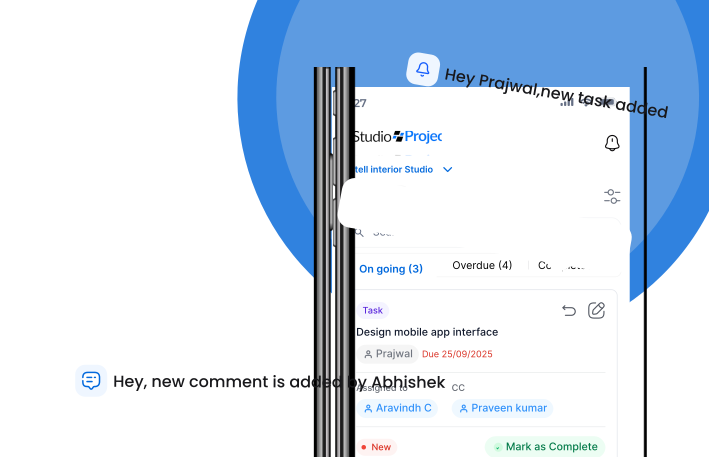
The platform automatically:
- Updates project progress.
- Notifies procurement if materials are delayed.
- Adjusts milestone tracking.
- Alerts project managers.
- Records the update against the correct project.
- Creates an auditable history.
No manual reporting.
No duplicate data entry.
No missed communication.
The project continuously updates itself through everyday conversations.
Great Execution Protects Profitability
Operational inefficiencies don’t just delay projects.
They reduce margins.
Repeated follow-ups consume valuable management time.
Incorrect procurement increases material costs.
Missed approvals lead to expensive rework.
Poor coordination extends project timelines.
Each delay affects profitability.
Strong execution creates operational efficiency.
Operational efficiency protects margins.
And healthy margins allow businesses to invest in better talent, better technology and sustainable growth.
The Future Belongs to Operationally Excellent Studios
The interior industry is becoming more competitive every year.
Clients expect:
- Faster delivery
- Greater transparency
- Accurate budgets
- Real-time updates
- Better communication
Beautiful design is no longer enough.
Studios that combine exceptional creativity with disciplined execution will build stronger brands, happier clients and more profitable businesses.
Execution is no longer a back-office function.
It’s part of the customer experience.
Key Takeaways
- Great design wins projects, but great execution wins long-term clients.
- Operational excellence depends on visibility, accountability and standardized workflows.
- Small execution failures create significant delays and budget overruns.
- AI-powered automation reduces manual coordination and improves project visibility.
- Businesses that invest in execution systems scale more predictably while protecting profitability.
Frequently asked questions
Why is execution more important than design?
Design creates client interest, but execution determines whether projects are delivered on time, within budget and with a positive customer experience.
What causes execution problems in interior projects?
Common causes include fragmented communication, manual follow-ups, unclear ownership, delayed approvals, poor procurement coordination and lack of project visibility.
How can project management software improve execution?
A centralized platform connects workflows, documents, approvals, procurement, financials and site updates, ensuring everyone works from the same information.
How does AI improve project execution?
AI can convert spoken site updates into structured project information, automate notifications, update dashboards and reduce manual reporting.
What should growing interior studios prioritize?
Studios should invest in standardized operational systems that improve visibility, accountability and collaboration across every project.